Introduction
Tata Punch EV 2026 – The electric car market in India is no longer limited to only premium buyers. Today, many middle-class families are seriously thinking about buying an EV because petrol prices, daily running cost and traffic stress have made normal city driving expensive. In this changing market, the Tata Punch EV 2026 has become one of the most interesting electric cars for Indian buyers.
| Key Highlight | Tata Punch EV 2026 Details |
|---|---|
| Car Type | Compact Electric SUV |
| Battery Options | 30 kWh and 40 kWh |
| Claimed Range | Up to 468 km ARAI |
| Fast Charging | Around 20% to 80% in 26 minutes |
| Boot Space | 366 litres |
| Ground Clearance | 195 mm unladen |
| Seating | 5 Seater |
| Starting Price | Around ₹9.69 lakh ex-showroom |
| Safety | Strong Bharat NCAP safety performance |
| Best For | City driving, family use, low running cost |
The reason is simple. The Tata Punch EV gives SUV-like styling, practical size, good range, strong safety and premium features without entering a very costly segment. It is not as small as a basic hatchback and not as expensive as a bigger electric SUV. For many people, this balance is what makes the car attractive.
In 2026, buyers are not only asking about price. They want to know real range, charging comfort, battery life, safety, features, service cost and whether the car is useful for family life. The Tata Punch EV tries to answer all these questions with a practical package.
Why Tata Punch EV Feels Important in 2026
The Indian buyer has changed. Earlier, people used to buy cars mainly by looking at mileage, brand name and resale value. Now, safety, features, technology and running cost are also becoming important. The Tata Punch EV fits this new mindset.
This car is especially important because it makes electric mobility feel more normal. It does not look like a strange experiment. It looks like a smart compact SUV that can be used every day. That is a big advantage because many buyers still feel nervous before buying their first EV.
The Tata Punch EV also comes from a brand that has already built a strong EV image in India. Tata has products like Tiago EV, Tigor EV and Nexon EV, so buyers have more confidence compared to a completely new company. This trust matters a lot when someone is spending over ₹10 lakh on an electric car.
Exterior Design
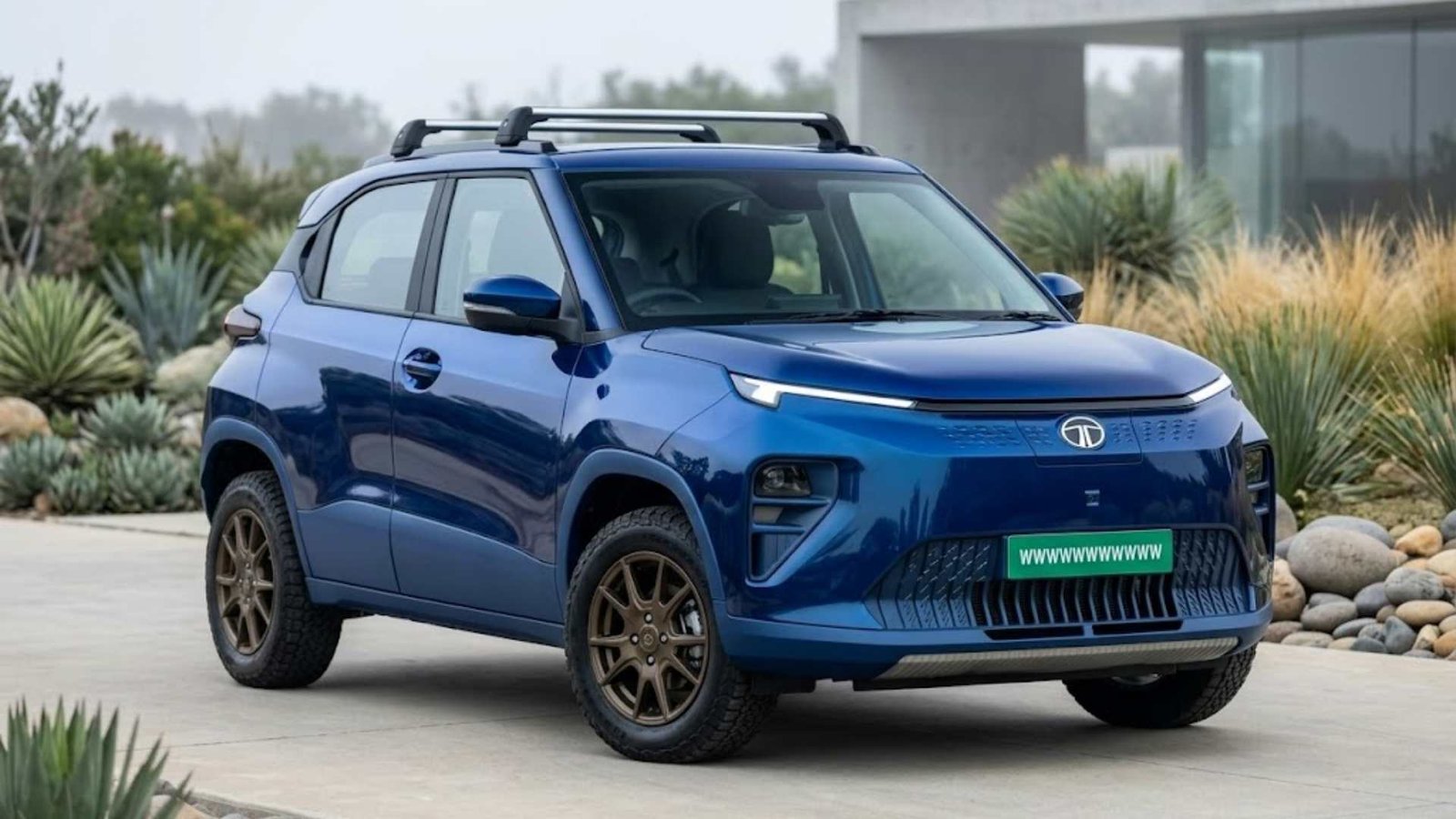
The design of the Tata Punch EV is one of its biggest strengths. It has a compact body, but the SUV styling gives it a bold look. The front design looks modern with EV-style elements, sharp lighting and a clean bumper layout. It does not look too aggressive, but it still has enough road presence.
The compact length helps in city traffic. Parking in malls, markets, apartments and narrow streets becomes easier. At the same time, the height and ground clearance give it a confident SUV feel. This is exactly what many Indian buyers want. They want a car that is easy to drive in the city but still looks strong on the road.
The alloy wheels, connected lighting effect and dual-tone colour options make the Tata Punch EV look more premium in higher variants. It has a youthful design, but it does not feel too flashy. This means it can attract young professionals as well as family buyers.
Interior and Cabin Experience
Inside the cabin, the Tata Punch EV feels much more modern than a basic city car. The dashboard design is clean, and the screen setup gives the car a premium touch. The higher variants get a large infotainment display, digital instrument cluster, connected features and several comfort additions.
The seating position is high, which gives the driver a clear view of the road. This helps a lot in Indian traffic. For new drivers, this confidence is useful because they can judge the road better. The front seats are comfortable for daily use, and the cabin feels airy enough for city trips.
The rear seat is good for two adults and one child. If three adults sit in the back for a long journey, it may feel slightly tight because this is still a compact SUV. But for a small family, office commute or weekend city travel, the rear seat is practical.
The boot space of 366 litres is also useful. It can handle grocery bags, school bags, office luggage and small travel bags easily. For a compact EV, this practicality gives the Tata Punch EV an advantage.
Battery and Range
The Tata Punch EV 2026 comes with 30 kWh and 40 kWh battery options. The smaller battery is mainly for people who drive mostly inside the city. If your daily running is around 30 to 60 km and you have home charging, the smaller battery can be enough.
The 40 kWh battery version is better for buyers who want more freedom. It offers a higher claimed range and gives more confidence for longer city use and short highway trips. This version is more suitable if the Tata Punch EV will be your main family car.
The claimed range goes up to 468 km, but real-world range will always be different. In Indian conditions, range depends on AC usage, traffic, speed, road condition and driving style. If you drive calmly, use regen smartly and charge properly, you can get a good practical range. If you drive fast on highways with full AC, range will reduce.
This is normal for every electric car. The important thing is that the Tata Punch EV gives enough range for most daily users. For office, school, market and local travel, it should feel easy to manage.
Charging Experience
Charging is the biggest lifestyle change when moving from petrol to electric. With the Tata Punch EV, the best experience will come if you have home charging. You can plug in the car at night and use it the next morning. This makes ownership simple.
Fast charging is useful during urgent travel or highway breaks. The 40 kWh version can charge from 20% to 80% in around 26 minutes with a suitable DC fast charger. This is helpful, but buyers should not depend only on public charging for daily use.
If you live in an independent house, installing a charger is usually easier. If you live in an apartment, you should check society permission, parking space and electricity connection before buying. This point is very important. A good EV experience depends not only on the car but also on your charging setup.
Driving Experience
The Tata Punch EV feels smooth and easy to drive. Because it is electric, there is no engine noise, no gear shift and no clutch. In city traffic, this makes a big difference. The car moves quickly from low speeds, and overtaking in traffic feels easy.
The instant torque gives the Tata Punch EV a lively feel. Even people who are coming from petrol hatchbacks will notice the quick response. The drive modes help adjust the performance according to need. Eco mode is better for saving range, while Sport mode gives a sharper response.
The steering is light enough for city use, and the compact size makes the car easy to handle. In daily driving, the Tata Punch EV feels relaxed. It is not made for racing, but it has enough punch for normal users.
Ride Comfort and Road Handling
Indian roads are full of surprises. Potholes, speed breakers, rough patches and uneven lanes are common in almost every city. The Tata Punch EV handles these conditions well because of its SUV-like stance and ground clearance.
The suspension is tuned for daily comfort. It absorbs small road problems nicely, and the car feels stable at city speeds. On bad roads, the higher ground clearance gives extra confidence. This is one of the reasons why compact SUVs have become so popular in India.
On highways, the Tata Punch EV feels stable at normal cruising speeds. However, fast driving will reduce range, so EV owners should drive smoothly if they want better efficiency. For weekend trips, it can work well if charging points are available on the route.
Features That Make Daily Life Easier
The Tata Punch EV is not just about battery and range. It also offers many useful features, especially in higher variants. The large touchscreen, digital cluster, wireless smartphone connectivity, 360-degree camera, ventilated front seats, sunroof, cruise control and connected car technology make the cabin feel premium.
The 360-degree camera is very useful in crowded Indian cities. It helps while parking in tight spaces. Ventilated seats are a blessing during summer, especially in places like Delhi, Kanpur, Jaipur, Ahmedabad and Lucknow. Wireless charging and wireless connectivity also reduce cable mess inside the cabin.
The Tata Punch EV also offers safety and convenience features that make daily driving easier. For a buyer who wants a modern car experience without buying a much bigger SUV, this feature list is attractive.
Safety and Family Confidence
Safety is one of the strongest points of the Tata Punch EV. The car has performed strongly under Bharat NCAP, which gives confidence to family buyers. In India, safety has become a serious topic, and buyers are now checking crash ratings before making a decision.
The Tata Punch EV comes with a strong safety package including multiple airbags, electronic stability control, ABS with EBD, ISOFIX child seat mounts, hill hold assist and tyre pressure monitoring system, depending on variant. The battery and motor also come with water and dust protection standards, which is important for Indian road conditions.
For a small family, this safety confidence matters a lot. Whether you are using the car for school drops, office runs or weekend travel, a safer car always gives peace of mind.
Running Cost
The main reason many people consider the Tata Punch EV is low running cost. If you charge at home, the cost per kilometre can be much lower than a petrol car. For people who drive daily, savings can become noticeable over time.
For example, a petrol car may feel cheaper at the time of buying, but daily fuel cost adds up quickly. An EV can cost more initially, but regular running is cheaper. This is where the Tata Punch EV becomes attractive for office-goers, business users and families with high city usage.
Maintenance is also expected to be simpler because EVs have fewer moving parts than petrol or diesel cars. There is no regular engine oil change. However, owners still need to spend on tyres, brakes, insurance, alignment and general service. So, it is not zero-maintenance, but it can be easier and cheaper in many areas.
Tata Punch EV for City Buyers
For city buyers, the Tata Punch EV makes a lot of sense. It is compact, easy to park, smooth to drive and cheap to run. The automatic EV drive makes traffic less tiring. In crowded areas, the small size becomes a blessing.
If your daily travel includes office, school, market, gym and local family visits, this EV can handle it comfortably. You may not need to charge every day if your running is moderate. This makes the Tata Punch EV a practical city partner.
The silent cabin also improves the overall experience. After driving an EV for some time, many people find petrol cars noisy. That smoothness is one of the hidden advantages of electric driving.
Tata Punch EV for Highway Users
The Tata Punch EV can be used on highways, but buyers need to be practical. The 40 kWh version is the better choice for highway use because it gives better range confidence. Still, long trips require route planning.
Before starting a long journey, you should check charging stations on the way. You should also keep some battery buffer instead of reaching a charger with very low charge. This habit is important for EV owners.
For short highway trips, weekend travel and nearby city visits, the Tata Punch EV can work well. But if you regularly travel very long distances in areas with poor charging infrastructure, a petrol or hybrid car may still feel easier.
Who Should Buy Tata Punch EV?
The Tata Punch EV is a good choice for buyers who have daily city running, access to home charging and a budget around the compact SUV segment. It is also suitable for small families who want a safe, modern and low-running-cost car.
It is a smart option for people upgrading from a petrol hatchback. It gives more features, better road presence and a fresh driving experience. It is also good for first-time EV buyers because it does not feel too complicated.
If you want a second car for city use, the Tata Punch EV is even more attractive. You can use it daily and keep your petrol car for very long trips if needed.
Who Should Avoid Tata Punch EV?
The Tata Punch EV may not be perfect for everyone. If you do not have home charging and public chargers are not reliable in your area, ownership may become stressful. If your daily travel is very low, the price difference compared to a petrol car may take longer to recover.
If you need a very spacious rear seat for five adults, a bigger SUV will be better. If you drive long highway distances every week, you should check charging infrastructure carefully before choosing an EV.
The Tata Punch EV is practical, but only when it matches your lifestyle. This is why buyers should think about real usage before booking.
Best Variant Choice
The best variant depends on your budget and usage. The 30 kWh version makes sense for strict city use. It keeps the price lower and is good for people who drive limited distances.
The 40 kWh version is better for buyers who want peace of mind. The extra range makes daily life easier and gives more confidence for weekend trips. For most family buyers, the 40 kWh variant feels like the safer long-term choice.
Feature lovers can go for the higher variants, but value buyers should compare carefully. Sometimes a mid variant gives the best balance of price, range and features.
Final Verdict
The Tata Punch EV 2026 is one of the most practical electric SUVs in India right now. It brings together style, safety, range, features and low running cost in a compact package. It is not trying to be the biggest or most powerful EV. Instead, it tries to be the most sensible EV for everyday Indian buyers.
For city families, office users and first-time EV buyers, the Tata Punch EV feels like a strong option. It is easy to drive, modern inside, safe on paper and affordable to run. The long-range version gives better confidence and makes the car more useful as a main family vehicle.
If you have home charging and your daily running is decent, the Tata Punch EV can be a smart buy in 2026. It offers the kind of balance that Indian buyers love: good looks, useful features, strong safety and savings in daily use.
FAQs
What is the price of Tata Punch EV 2026?
The Tata Punch EV 2026 starts at around ₹9.69 lakh ex-showroom. The final on-road price depends on city, insurance, variant and registration charges.
What is the range of Tata Punch EV?
The Tata Punch EV offers up to 468 km ARAI claimed range in the 40 kWh version. Real-world range will be lower and depends on driving style, AC use, traffic and speed.
Is Tata Punch EV good for family use?
Yes, the Tata Punch EV is good for small families. It offers good safety, useful boot space, comfortable front seats, modern features and low running cost.
Which battery option is better in Tata Punch EV?
The 30 kWh battery is good for city use, while the 40 kWh battery is better for buyers who want more range and confidence. For most family buyers, the 40 kWh version is more practical.
Is Tata Punch EV good for highway driving?
The Tata Punch EV can be used for highway trips, especially the 40 kWh version. However, long trips need charging planning, so checking chargers on the route is important.
Does Tata Punch EV support fast charging?
Yes, the Tata Punch EV supports DC fast charging. The 40 kWh version can charge from around 20% to 80% in about 26 minutes under suitable charging conditions.
Is Tata Punch EV worth buying in 2026?
Yes, the Tata Punch EV is worth buying in 2026 for users who want a compact electric SUV with good range, strong safety, modern features and low daily running cost.