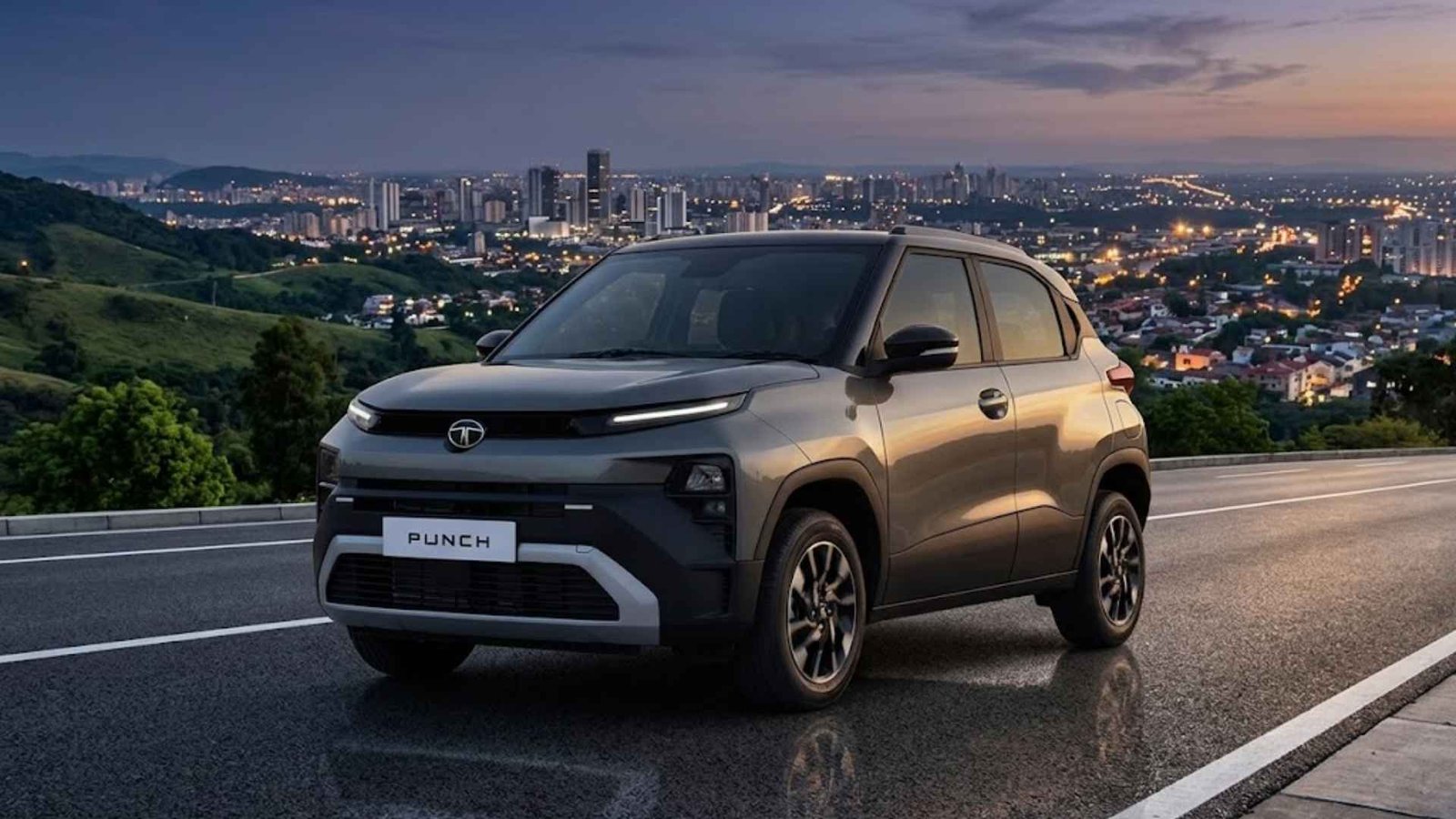
Tata Punch 2026-If you have been scrolling through car forums or standing at a Tata showroom lately, chances are the Tata Punch 2026 has already caught your eye. It’s not a new car exactly — Tata has given its popular micro-SUV a proper mid-life update, and honestly, it’s more than just a sticker job. New face, new engine option, new cabin bits, and a price tag that still keeps it in “sensible family car” territory.
But is it actually worth your hard-earned money in 2026, or is it just old wine in a slightly shinier bottle? Let’s break it down the way a friend would over chai, not the way a brochure would.
Quick Overview: Tata Punch 2026 Key Details
Before we get into the detailed talk, here’s a table with the important numbers so you don’t have to hunt for them later.
| Detail | Information |
|---|---|
| Launch Price (Ex-showroom) | ₹5.59 lakh onwards |
| Top Variant Price | Around ₹9-10.5 lakh (approx, varies by variant) |
| Engine Options | 1.2L Petrol, 1.2L Petrol + CNG, new 1.2L Turbo-Petrol |
| Turbo Engine Power | Around 118-120 bhp, 170 Nm torque |
| Transmission | 5-speed Manual, AMT (select variants), 6-speed Manual (Turbo) |
| Mileage (Real-world, reported by owners) | Around 18-19 kmpl |
| Safety Rating | 5-star Bharat NCAP (adult and child occupant) |
| Airbags | 6 airbags standard |
| Ground Clearance | Around 193 mm |
| Seating Capacity | 5 |
| Infotainment | 10.25-inch touchscreen with wireless Apple CarPlay/Android Auto |
| Rivals | Hyundai Exter, Citroen C3, Maruti Fronx, Nissan Magnite, Toyota Taisor |
| Best Suited For | City drivers, small families, first-time SUV buyers |
Keep this table in mind, we’ll expand on almost every point below.
What’s New in the Tata Punch 2026 Facelift?
This is Tata’s first big update to the Punch since it launched back in 2021, and the changes are noticeable the moment you look at it.
Design Changes: Sharper, Bolder, More Grown-Up
The front end has been redone with a slimmer grille, new LED DRLs, and a reworked bumper with a vertically stacked headlamp cluster. Reportedly, the overall stance feels more mature compared to the older, slightly cartoonish look of the original Punch. At the back, there’s a new connected LED tail lamp setup and a fresh skid plate design that adds a bit of visual muscle.
The side profile hasn’t changed drastically — Tata seems to have kept the boxy, upright SUV stance that people liked in the first place, just refreshed the alloy wheel design (new diamond-cut units). It’s a smart move, honestly. Why fix what wasn’t broken?
Tata Punch 2026-Interior Updates: Feels a Notch More Premium
Step inside and the change is more obvious. The dashboard layout is borrowed in parts from the Punch EV, with a dual-tone charcoal-blue theme and white inserts that lift the cabin mood. There’s a new two-spoke steering wheel with an illuminated logo, a touch-based AC control panel similar to what you’d find in the Nexon, and a fully digital instrument cluster.
Rear passengers finally get some love too — extendable thigh support, a centre armrest, and rear AC vents. These sound like small things on paper, but if you’ve ever done a 3-hour highway drive in the older Punch, you’ll know how much these additions matter for comfort.
Tata Punch 2026-The Big One: A Proper Turbo-Petrol Engine
This is probably the most talked-about update. The older Punch was often criticised for feeling underpowered, especially on highways or when loaded with passengers and luggage. Tata has addressed this directly by adding a 1.2-litre turbo-petrol engine (understood to be borrowed from the Nexon) that reportedly makes around 118-120 bhp and 170 Nm of torque, paired with a 6-speed manual gearbox.
The naturally aspirated 1.2-litre petrol and petrol-CNG options continue as before for buyers who prioritise fuel economy or lower running costs over outright performance.
Tata Punch 2026 Price: Is It Still a “Budget” SUV?
The Tata Punch 2026 facelift starts at ₹5.59 lakh (ex-showroom) for the base Smart variant, going up to around ₹9-10.5 lakh for the fully loaded top-spec models, depending on the exact variant and engine choice. The CNG range typically starts a notch higher.
Here’s an interesting bit — the starting price hasn’t jumped by much compared to the outgoing model, which is a bit of a relief in a market where every facelift seems to add ₹50,000-₹1 lakh over the outgoing car. The turbo-petrol variant does come at a slight premium, but it’s not asking for a huge jump, considering the extra performance and features it brings.
Practically speaking, if you’re eyeing the mid-spec variants (Pure+ or Adventure), you’re likely looking at somewhere between ₹7-8 lakh on-road, depending on your city, insurance, and financing terms. Always check the on-road price at your local dealership since RTO and insurance charges vary by state.
Real-Life Usage: What’s It Actually Like to Drive and Live With?
Numbers on a spec sheet are one thing, but daily usability is what actually matters once the car is sitting in your garage.
City Driving
The Punch’s compact size, tight turning radius, and reasonably good visibility make it genuinely easy to drive in Indian city traffic. Parking in tight societies, squeezing through narrow lanes, U-turns at busy signals — this is where the Punch feels right at home. The naturally aspirated engine is adequate for city speeds, though it does need to be revved a bit for quick overtakes.
Highway Driving
This is exactly where the new turbo engine makes the biggest difference. Owners of the older Punch often complained about the car running out of breath while overtaking on highways. The turbo-petrol, with its added torque, is expected to make highway cruising and overtaking noticeably more relaxed. If highway driving is a big part of your usage, the turbo variant is worth the extra spend.
Ride Quality and Ground Clearance
With around 193mm of ground clearance, the Punch continues to handle Indian roads, speed breakers, and semi-broken patches with confidence — something SUV buyers in India genuinely care about. The suspension setup remains tuned more towards comfort than outright sporty handling, which suits family use.
Mileage and Running Costs
As per owner-reported figures, the Punch’s mileage typically comes in around 18-19 kmpl in real-world conditions (city and highway combined), though this will naturally vary with driving style and traffic conditions. The CNG variant is the obvious pick if your monthly running is high and you want to keep fuel costs down — CNG running costs are usually significantly lower per km compared to petrol.
Safety and Software: Where the Punch Genuinely Impresses
Safety has been one of the Punch’s strongest selling points since launch, and Tata has kept this up in the 2026 update. Six airbags come as standard across the range now, not just on top variants, which is a genuinely buyer-friendly move considering how many rivals still restrict airbags to expensive trims. It also carries a 5-star Bharat NCAP rating for both adult and child occupant protection.
Other safety-related features reportedly include ABS with EBD, electronic stability control (ESC), hill-hold assist, tyre pressure monitoring system (TPMS), and ISOFIX child seat mounts. There’s also a 360-degree camera system on higher variants, which is genuinely useful for tight parking spots.
On the software side, the 10.25-inch touchscreen supports wireless Apple CarPlay and Android Auto, and the digital instrument cluster gives a more modern feel to the dashboard compared to the outgoing analogue-heavy setup. Voice command support for functions like the sunroof is a nice, if slightly gimmicky, touch.
Ownership and Maintenance Cost
Tata’s service network has expanded quite a bit over the past few years, so finding an authorised service centre isn’t the struggle it used to be in smaller towns. That said, spare part costs and after-sales experience can still vary noticeably by city — it’s worth checking with your local dealership about service costs and waiting times before you commit.
The CNG variant does need slightly more attentive servicing (cylinder checks, etc.), but running costs are lower in the long run if you drive high monthly kilometres. The turbo-petrol, being a more powerful engine, may have marginally higher maintenance costs compared to the naturally aspirated version, though this isn’t officially confirmed and is more of a general expectation with turbocharged engines.
Tata Punch 2026 vs Rivals: How Does It Stack Up?
Tata Punch 2026 vs Hyundai Exter
The Exter has a slightly more premium cabin feel and Hyundai’s brand pull works in its favour for resale value. However, the Punch counters with a stronger safety score, the new turbo engine option, and a marginally lower starting price.
Tata Punch 2026 vs Maruti Fronx / Toyota Taisor
These two are technically a size up and lean more towards a crossover-hatchback design than a traditional SUV stance. They also come with the option of a more refined 3-cylinder turbo-petrol and, in some variants, a hybrid setup. If you want SUV-like looks with a boxier stance, the Punch still wins; if you want a slightly more premium and versatile package, the Fronx/Taisor duo deserves a test drive too.
Tata Punch 2026 vs Nissan Magnite / Citroen C3
The Magnite and C3 are priced competitively and offer decent features, but neither matches the Punch’s safety credentials or Tata’s service network reach in smaller towns. The Punch generally holds an edge here for buyers prioritising peace of mind over outright cabin plushness.
Who Should Buy the Tata Punch 2026?
- First-time car buyers looking for an SUV-styled vehicle without a hatchback-level budget
- Small families who mostly drive within the city with occasional highway trips
- Buyers who prioritise safety ratings and airbag count over outright cabin luxury
- Anyone wanting a CNG option without compromising too much on SUV looks
- Buyers who found the older Punch appealing but wanted more power — the turbo variant is built exactly for you
Who Should Probably Avoid It?
- Buyers who need a genuinely spacious third-row or a bigger boot for large families
- Those who want an automatic (torque converter or DCT) with the turbo engine — currently, the turbo is manual-only
- Buyers who prioritise a plush, premium cabin feel above everything else — some rivals still edge ahead here
- Anyone doing very high daily highway mileage and wanting a diesel option — the Punch doesn’t offer one
Honest Pros and Cons
Pros:
- Strong safety credentials with 6 airbags as standard and a 5-star Bharat NCAP rating
- New turbo-petrol engine finally solves the “underpowered” complaint
- Reasonable starting price for what’s on offer
- Compact size makes city driving and parking genuinely easy
- CNG option available for buyers watching fuel costs
- Feature list (360 camera, wireless charging, digital cluster) feels generous for the price bracket
Cons:
- No automatic gearbox option with the turbo engine yet
- Boot space and rear-seat room are still tight for taller passengers or big families
- Cabin materials, while improved, still don’t fully match some premium rivals
- Turbo variant pricing pushes it closer to bigger, more spacious SUVs in the segment above
Final Verdict: Is the Tata Punch 2026 the Best Budget SUV of the Year?
Calling any car the “best” is always a bit subjective — it really depends on what you personally value in a car. But if your checklist includes strong safety, sensible pricing, easy city driving, and now a genuinely capable engine option, the Tata Punch 2026 makes a very strong case for itself in the budget SUV space.
It’s not perfect — the lack of an automatic turbo option and the somewhat tight rear seat space are real compromises. But for the price it’s asking, especially in the mid-spec variants, it’s hard to find another SUV in India that ticks as many practical boxes at once. If you’re a city-first driver who occasionally hits the highway and cares deeply about safety numbers, the Punch deserves a serious test drive before you finalise anything else.
Frequently Asked Questions (FAQs)
Q1. What is the starting price of the Tata Punch 2026? The Tata Punch 2026 facelift starts at ₹5.59 lakh (ex-showroom) for the base petrol variant.
Q2. Does the Tata Punch 2026 get a turbo engine? Yes, it now offers a new 1.2-litre turbo-petrol engine reportedly producing around 118-120 bhp, alongside the existing naturally aspirated petrol and CNG options.
Q3. Is the Tata Punch 2026 safe? Yes, it comes with 6 airbags as standard across variants and holds a 5-star Bharat NCAP rating for both adult and child occupant safety.
Q4. What is the real-world mileage of the Tata Punch 2026? As per owner-reported figures, it’s around 18-19 kmpl, though this can vary based on driving conditions and habits.
Q5. Is the turbo-petrol Tata Punch available with an automatic gearbox? As of now, the turbo-petrol variant is offered only with a 6-speed manual transmission; no automatic option has been confirmed for it yet.
Q6. Which cars compete with the Tata Punch 2026? Its main rivals include the Hyundai Exter, Citroen C3, Maruti Fronx, Toyota Taisor, and Nissan Magnite.
Q7. Is the Tata Punch 2026 good for highway driving? The turbo-petrol variant is noticeably better suited for highway cruising and overtaking compared to the standard petrol version, which is more city-oriented.